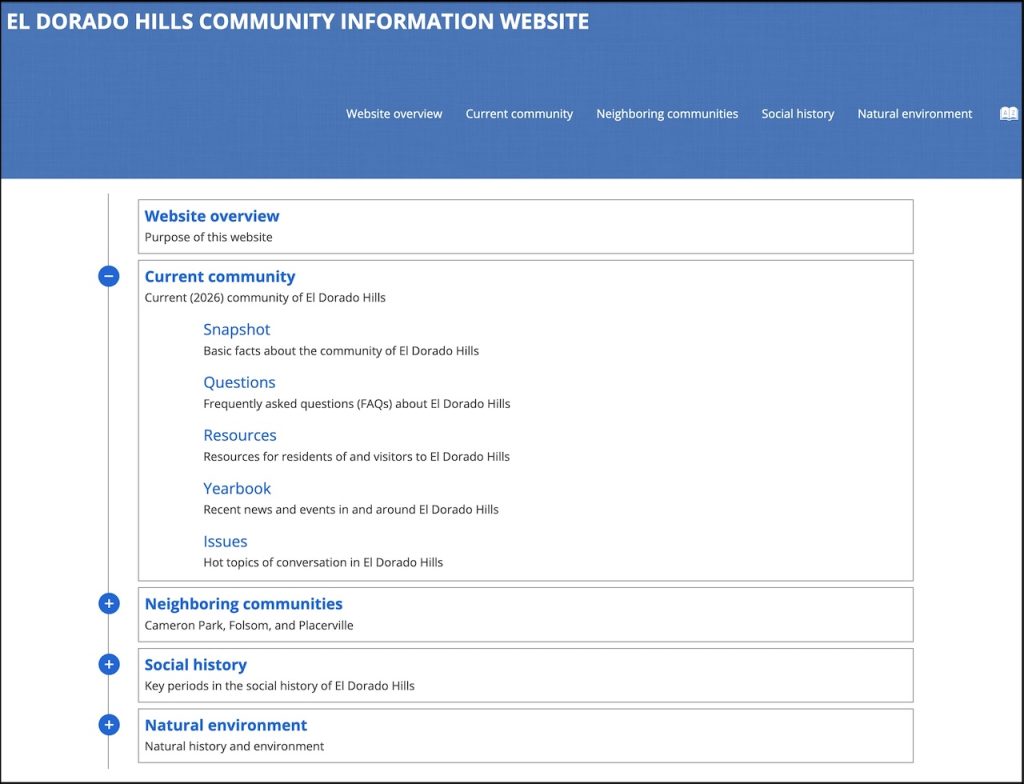
The EDH community information project is a structured, DITA-based local knowledge base for El Dorado Hills, California, published in an Oxygen WebHelp Responsive format so residents, visitors, and organizations can explore trusted, well-organized information. It is also a model other communities and organizations can use when planning and constructing similar projects.
Link to the external version of the project, for general audiences
Project status: “beta”
This is actually the second version of our EDH project: The original was published as a detailed PDF in 2003, when we lived in El Dorado Hills and were actively researching, photographing, and writing in the area. Because we no longer live in EDH, and the 2025-2026 project team lacks a current local subject-matter verifier, this version can’t actually be presented as “finished.”
In software and knowledge work, “beta” means the structure is in place and ready to use, but we expect to keep improving it with feedback.
We hope this example, even in its “beta” state, inspires similar projects by community information teams who are looking for better ways to communicate and collaborate, responsibly and effectively, among themselves and with AI partners.

How the website adds value to the community
Here are some key ways this kind of information benefits the El Dorado Hills community:
- Helps outsiders (prospective residents, partners, remote workers) understand what El Dorado Hills has to offer, with more nuance than a short tourism blurb or real-estate listing.
- Supports community pride by showing the range of neighborhoods, services, activities, and stories in a coherent, professional-looking presentation.
- Brings scattered information together into one searchable, browsable hub, so people don’t have to jump between multiple sites or PDFs to get a sense of El Dorado Hills.
- Provides a collaborative information environment that encourages people to work together instead of being at odds or in competition over who “owns” knowledge about the community.

Why a modern, approachable viewing experience matters
We decided to transform our original overly detailed printed content to WebHelp Responsive because:
- We wanted it to be accessible and appealing to real people, not just techies and history buffs.
- The site’s standard features (search, breadcrumbs, and easy-to-follow navigation) make it feel like a familiar help or knowledge site rather than a custom one-off.
- The content is easy to read on phones, tablets, and desktops, which is essential for a public community resource.
- The clear topic structure (short pages, logical headings) helps people skim quickly to what they want and need.

Explore the site, and be inspired!
- Feel free to explore the external site for information, ideas, and inspiration.
- Imagine how your community or group might benefit from this approach to organizing and sharing local knowledge.
What’s next?
Future posts here will show how trusted sources, human/AI collaboration, and DITA/xml modeling make this evolution practical and sustainable for other projects as well.
If you’d like an advance peek into “how it all happens,” here’s a link to the internal, “for collaborators only” version of the website:
Link to the internal version of the project, for collaborators
Some content and annotations may change or disappear as we update the project.
