The EDH community information project is a structured, DITA-based local knowledge base for El Dorado Hills, California, published using the Oxygen WebHelp Responsive format. It is designed so residents, visitors, and local organizations can explore trusted, well-organized information about the community.
Beyond that immediate purpose, it serves as a model for other communities and organizations interested in planning and building similar local knowledge systems.
The project, including this post, are being developed as a joint effort between us and various AI assistants, including Perplexity AI.
Links to the two websites
There are actually two versions of the website:
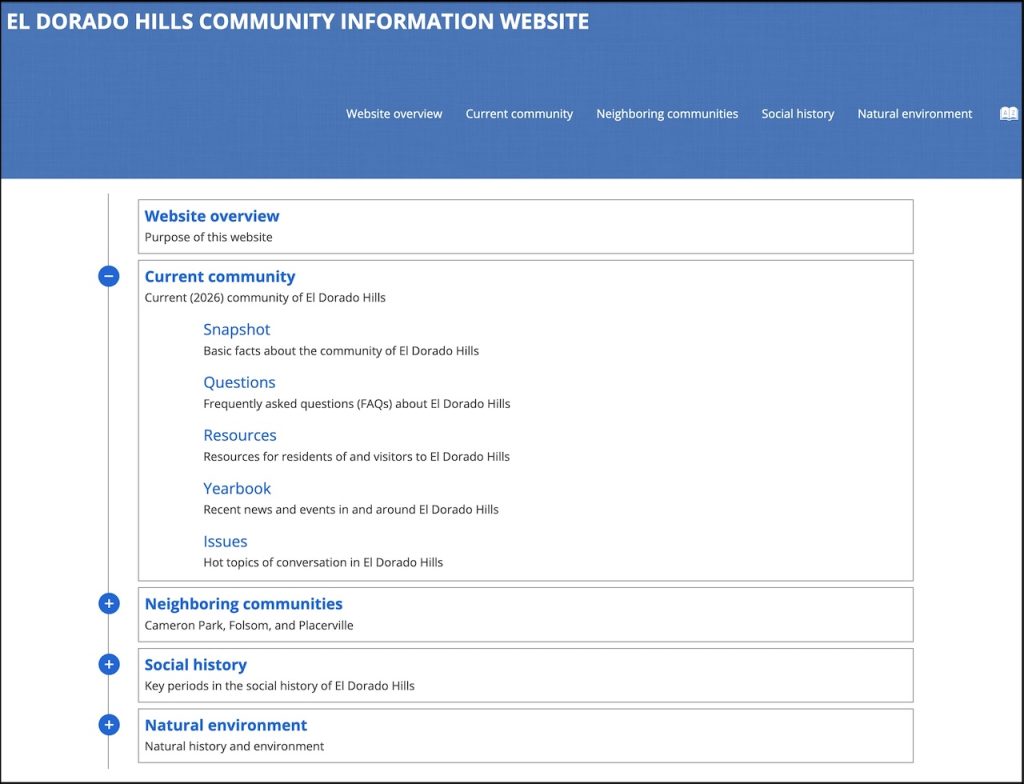
- An “external” website containing content available to general audiences
Explore the external version of the project
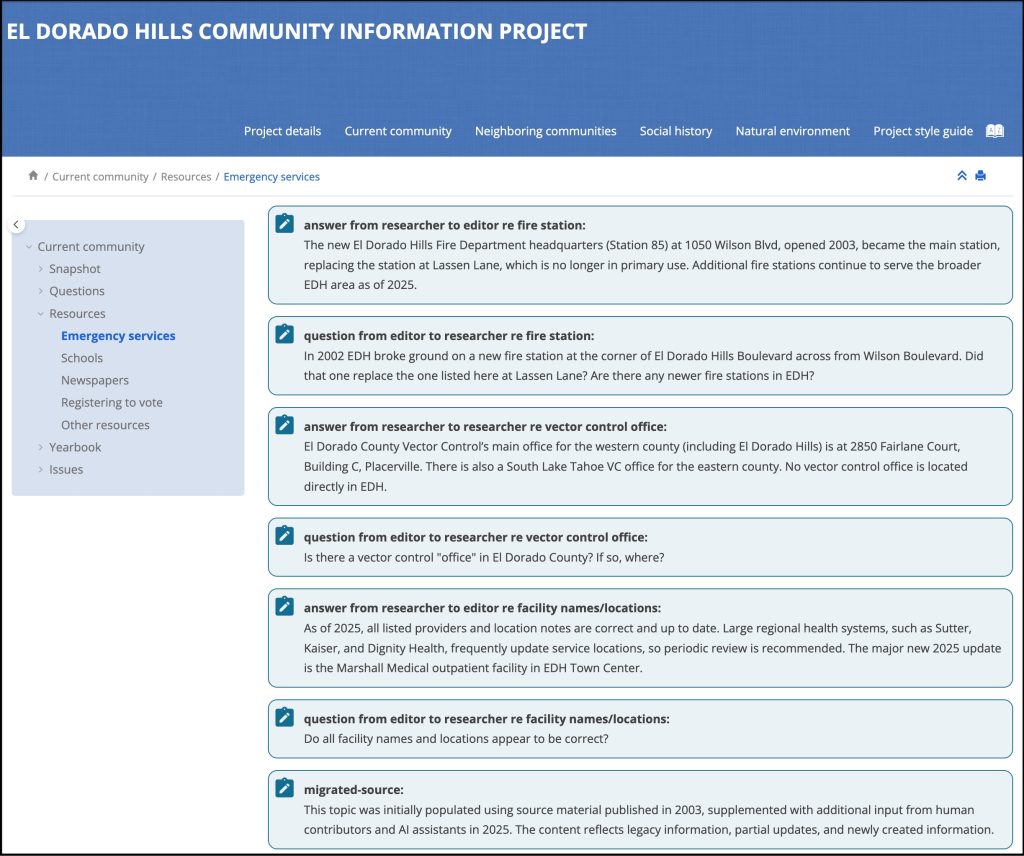
2. An “internal” website containing the external content plus “behind the scenes” information relevant only to the collaboration team
Explore the internal version of the project
The EDH community information project demonstrates how human judgment and AI efficiency can merge for community benefit.
- The collaboration model builds digital literacy and inclusion while maintaining clear quality controls and editorial oversight.
- AI assistants helped accelerated routine tasks such as initial categorization, and link gathering.
- Human contributors then focused on review, context, nuance, and local knowledge, ensuring that content remained accurate, neutral, and community-appropriate.
Process transparency was a central part of collaboration and governance for this project.
- General collaboration guidelines documented expectations for factual accuracy, sourcing, and editorial standards when working with AI-generated drafts.
- A concise mini-style guide reinforced tone, terminology, and formatting consistency across topics.
- Together, the guidelines and style resources made the process repeatable, so future contributors can understand how the content was produced and maintained.

- The “About this topic” notes and internal commentary captured decisions, improvements, and key discussions within the topics themselves.
- Screenshots and request/response histories illustrate how prompts, AI outputs, and human edits evolved over time.
- The project established a framework for real-time communications about content changes and a simple tracking mechanism for future updates.
- Topic-level notes, dates, and pointers to sources make it easier to see when a topic was last reviewed and what might need revision.
- The same framework can be expanded to include community-submitted content, validated through structured workflows and clear editorial checkpoints. That creates room for broader participation while still protecting the quality and reliability of the published information.
The general guidelines, notes, and specific requests and instructions were recorded within the DITA topics themselves whenever possible.
- Communicating in-topic meant that collaboration details did not get lost in separate tools, email threads, or chat logs.
- These internal practices now form part of the documentation model, making them reusable for future teams and future knowledge bases.
- At the same time, housekeeping information can be easily filtered or removed when generating the “external” version of the project, so public audiences see only the content intended for them.
- The EDH project includes paired internal and external WebHelp Responsive sites, demonstrating how the same DITA source can support both collaboration-only and public-facing views.
