
The EDH community information project is a structured, DITA-based local knowledge base for El Dorado Hills, California, published in an Oxygen WebHelp Responsive format so residents, visitors, and organizations can explore in one place trusted, well-organized information about the community. It is also a model for other communities and organizations to use in planning and constructing similar projects.
Links to the two websites
There are actually two versions of the website:
1. An “external” website containing content available to general audiences
“EDH Community Information (2026-01-13)” (website external)
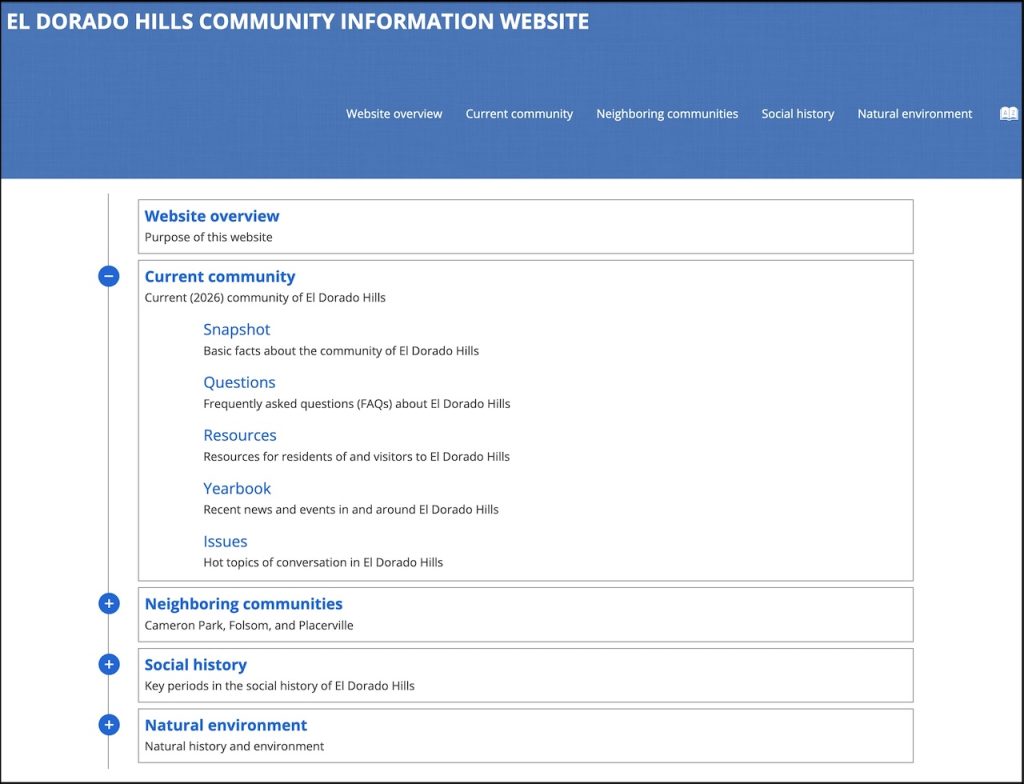
2. An “internal” (“project”) website containing the external content plus “behind the scenes” information relevant only to the creation and collaboration team
“EDH Community Information (2026-01-13)” (project internal)
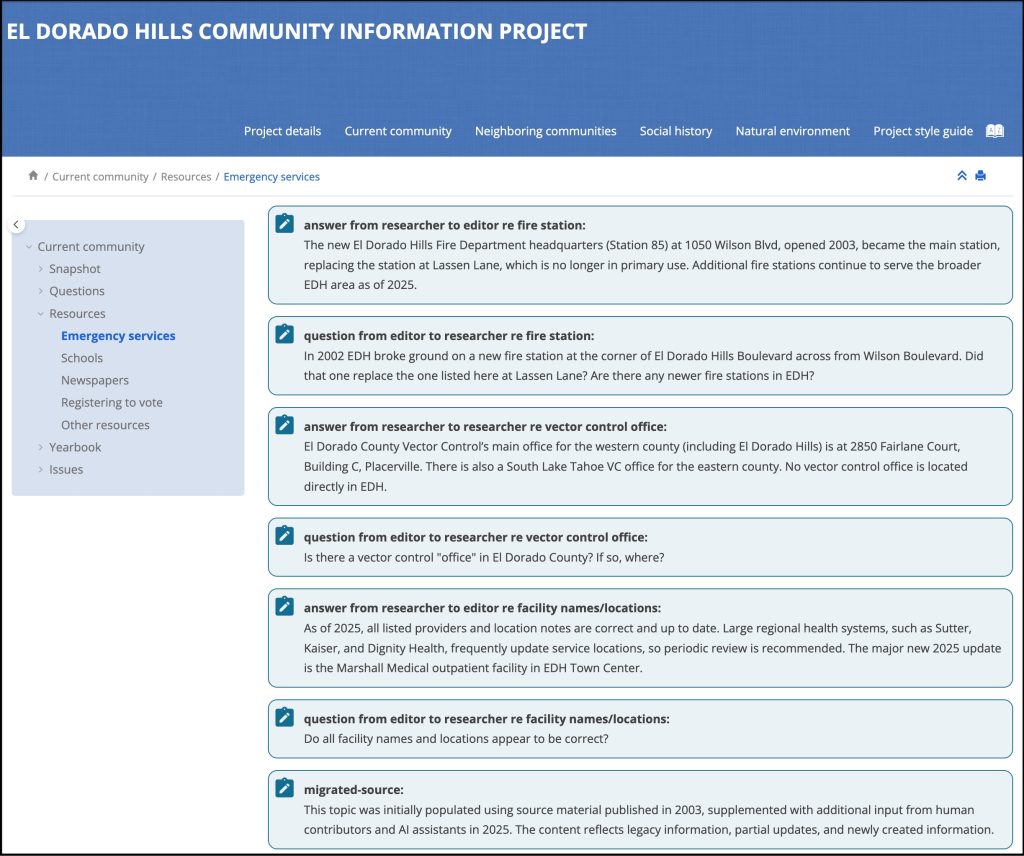
Collaboration team
The collaborators for this project were ourselves, Perplexity AI, and oXygen XML Editor, and Positron AI Assistant.
Project history and goal
We created the original El Dorado Hills (EDH) project and published it to PDF in 2003, when we were residents of EDH and were actively researching, photographing, and writing in the area. Because we no longer live in El Dorado Hills, and the 2025-2026 project team lacks a current human “verifier,” the current project can’t actually be “finished.”
However, we hope our example, even in its unfinished state, inspires other such projects by human teams looking for better ways to communicate and collaborate, responsibly and effectively, among themselves and with AI partners.
Project objectives
- To provide minimal (yet authentic, trustworthy, and relevant) information about the Sierra foothills town of El Dorado Hills, California, to current and future residents, visitors, and other interested persons
- To provide an example of a collaborative human/AI information project, created effectively and responsibly using the latest tools and techniques
- To provide an example of a structured knowledge base written in DITA/xml
What’s next?
Over the next several weeks I plan to post more information about the EDH project, for example, why we chose to use DITA/xml, how we collaborated with each other and our AI partners, and what lessons we learned from the project.