Rocks and minerals
Rocks and minerals
Overview.
Rocks found in the western Sierra are usually metamorphic or igneous. Rocks found further down in the Valley are usually sedimentary.
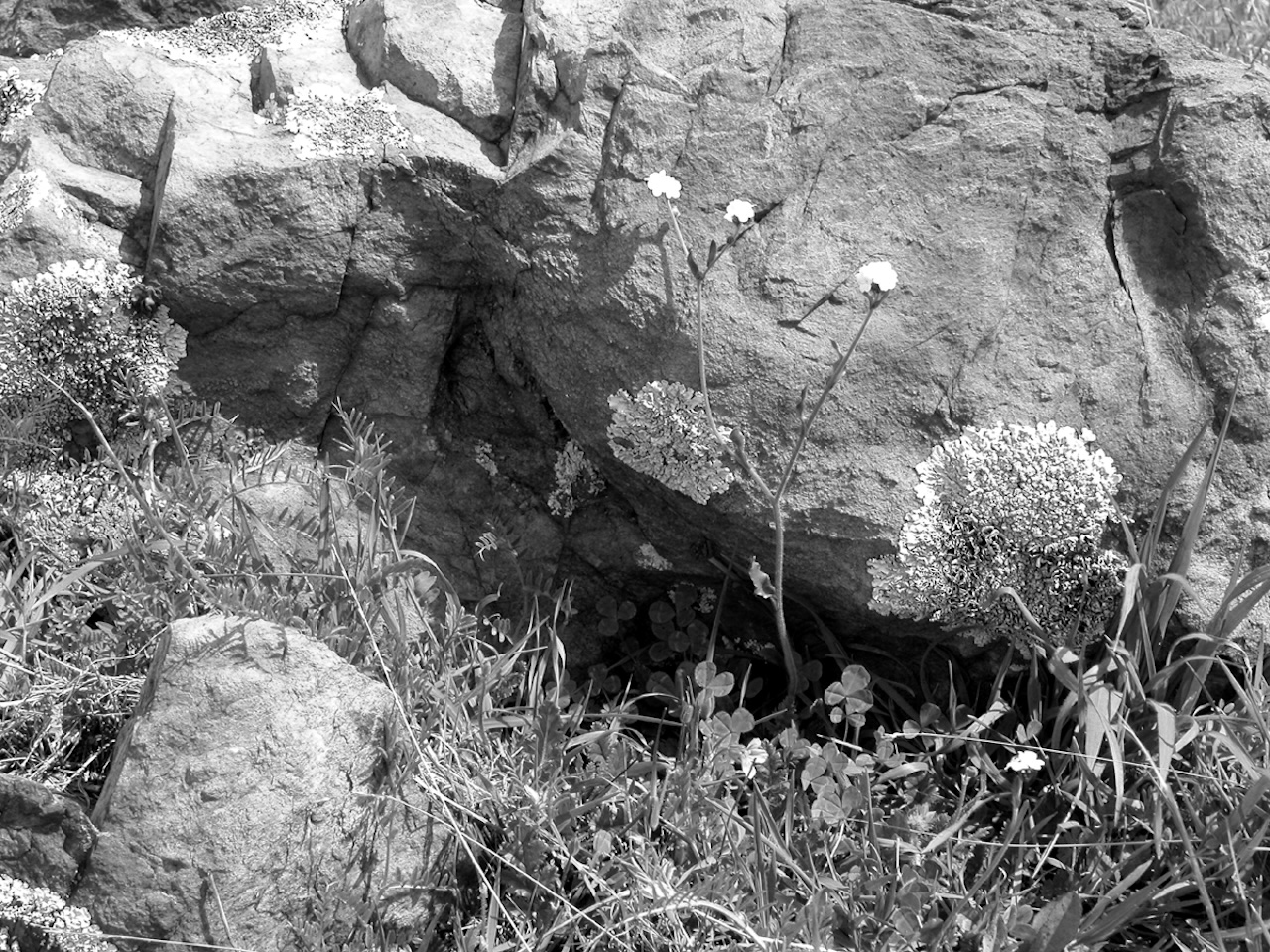
One of the more common rocks in El Dorado Hills is serpentine, a gray-green rock made up of hydrated silica and magnesium with small amounts of iron or nickel. Soil resulting from the breakdown of this rock is relatively low in plant nutrients, which is one reason the vegetation on many hills in our community is rather sparse. (Other reasons are damage by grazing animals and local patterns of rainfall and drainage.)
Asbestos in El Dorado Hills.
Naturally occurring asbestos, in the form of a mineral called chrysotile, is sometimes found in serpentine rock, especially near fault zones.
Other rocks and minerals in El Dorado County.
Other rocks and minerals found in El Dorado County include the following:
- Chromite, which is used to make chrome and which was mined at one time in El Dorado Hills along Carson Creek
- Copper, which is collected as crystals and, when used for industrial purposes, is usually alloyed with other metals
- Eldoradoite, a blue variety of quartz
- Galena, the most common ore of lead
- Garnet, which occurs in many colors, including red, purple, orange, green, white, and brown, and is popular in jewelry
- Loadstone (magnetite), which is magnetic in nature and rich in iron
- Marble, which is recrystallized limestone
- Tourmaline, which occurs as hexagonal crystals most commonly colored black, green, or red
Glossary
The following table lists key terms used in this topic and their definitions.
| Term | Definition |
|---|---|
| asbestos | A group of minerals with a fibrous appearance. The asbestos form of serpentine, a rock common in El Dorado Hills, is called chrysotile. |
| igneous rocks | Sometimes called volcanic rocks. Rocks that come from magma (molten or semi-molten rock) found deep in the earth. When magma cools beneath the surface, intrusive rocks are formed. Examples include granite and gabbro. Magma that reaches the surface forms extrusive rocks. Examples include lava, obsidian, and basalt. Igneous rocks are often associated with metal ores. |
| metamorphic rocks | Rocks that have been changed by heat, pressure, or permeation by other substances. Examples include marble, quartzite, and schists. |
| sedimentary rocks | Rocks made of minerals that have been moved from their place of origin to another place of deposition. They are generally extremely varied, differing greatly in texture, color, and composition. Examples include sandstone, shale, and limestone. |
| serpentine | A gray-green rock made up of hydrated silica and magnesium with small amounts of iron or nickel. Serpentine rocks are common in the El Dorado Hills area. |
Rock and mineral observation sites.
Popular sites, and the rocks and minerals likely to be found there, include the following:
- Folsom (along the American River): granitic rocks and cobbles (dredger tailings)
- Georgetown: serpentine, jade, garnet, and vesuvianite
- Placerville (north of town): jade
- Pollock Pines (west and southwest of town): quartz crystals
- Volcanoville (north of Chiquita lake): quartz crystals
- White Rock Road (south of the Aerojet property): cobbles (dredger tailings)