Native peoples
The Native way of life
Before the Spaniards arrived in 1542, the Sierra foothills were home to the Maidu and Miwok. Their communities moved seasonally across the region, with a loose boundary between them running through today's El Dorado Hills.
Organization. The Maidu and Miwok formed small, independent communities (community-republics) and occasionally informal confederations. Kinship and language, rather than strict tribal lines, defined these groups. The broader language family of both peoples was Penutian.
Homes and customs. Winter homes were bark-covered lodges; in summer, most lived outdoors. The people were generally peaceful, resourceful, and in tune with the environment. Quiet speech was the norm—a valuable skill for hunters.
What they ate
Sierra foothill natives had a varied diet. Fish (like salmon and eel) came from rivers and creeks; game included antelope, elk, deer, rabbits, and quail. They gathered nuts, wild onions, berries, grapes, and edible greens.
Acorns: Key staple. Oak groves provided acorns—cracked with hammerstones, ground into meal, and eaten as mush, bread, or soup.
Acorn harvest. Acorns were gathered when ripe in the fall. The group watched for early windfalls to time the harvest, which began only after the official start decided by a leader. Men and boys shook or knocked down nuts; others gathered them from the ground. Families collected large harvests in a few hours.
Storage and preparation. Acorns were kept in basket granaries lined with aromatic herbs for preservation. Leaching the bitter tannin—by soaking and draining the meal—made them edible.
Destruction of the Native way of life
The legend of el dorado inspired a gold rush that would devastate native life in the region. After gold’s discovery in the 1840s, thousands of settlers and miners destroyed villages and food supplies, hunted the people, and polluted rivers and streams.
Native communities shrank drastically—from about 125,000 people in 1849—with many trying gold mining. Soon seen as competitors by new arrivals, they were pushed aside or worse.
How the Indians live today
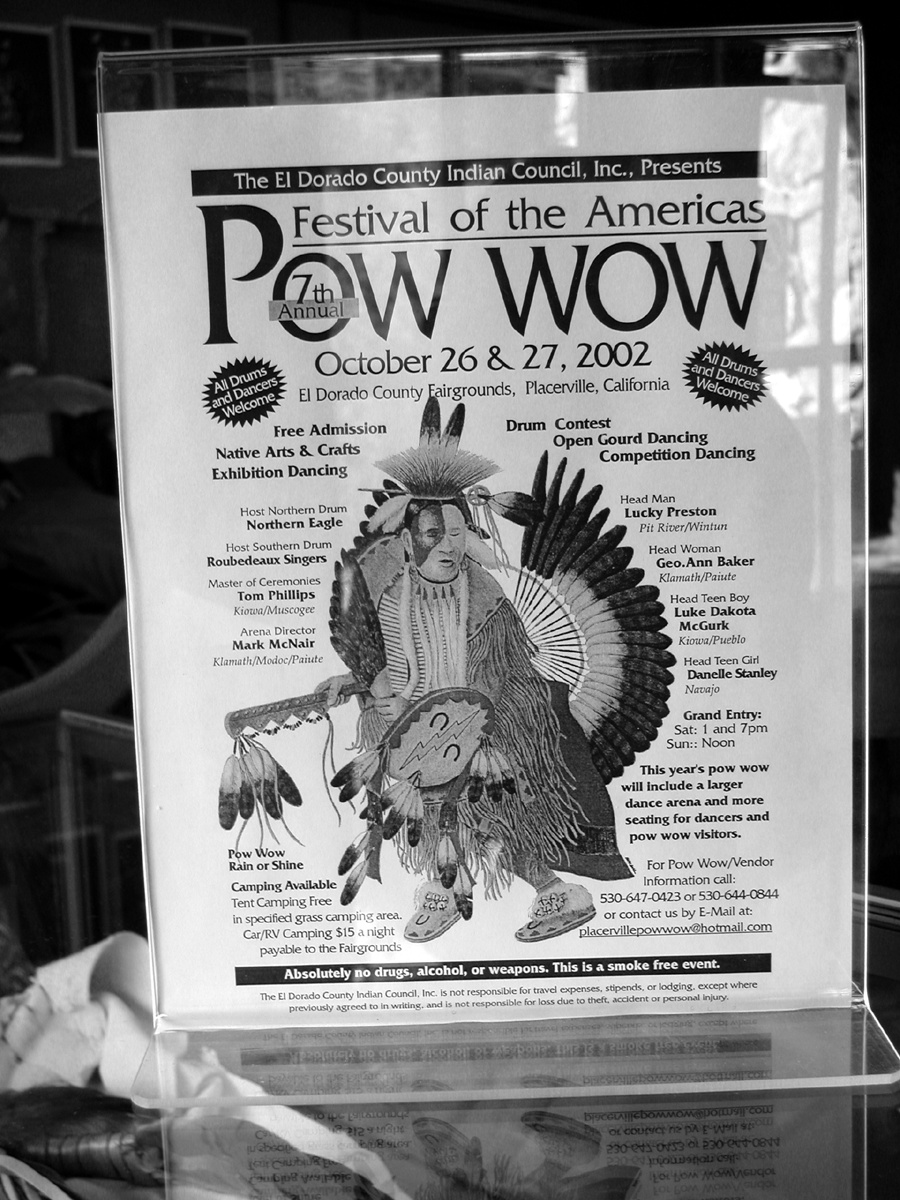
Some Native Americans still live in western El Dorado County. The Shingle Springs Rancheria (Miwok) is located north of Highway 50. The Crystal Mountain Casino sits on this land and is a point of contention among tribes, local agencies, and neighbors.
Glossary
Key terms used in this topic:
| Term | Definition |
|---|---|
| acorn | Primary food staple of the area’s native peoples, ground into meal for mush, bread, or soup. |
| grinding rock | Large rock used as a mortar for crushing acorns; recognizable by round depressions. |
| hammerstone | Stone tool for cracking acorns. |
| Maidu | One of the two main indigenous groups of the Sierra foothills. |
| Miwok | The other main indigenous group of the Sierra foothills. |
| Penutian | Language group of the Maidu and Miwok. |
| petroglyph | Ancient image carved or drawn on rock. |
| tannin | Bitter chemical in acorns; must be leached out before eating. |
| village | Core sociopolitical unit, both in native and modern El Dorado Hills. |
Suggested field trip: Indian Grinding Rock State Historical Monument
Located near Jackson, Amador County, this park contains the largest known bedrock mortar—with over 1,000 indented mortar holes and more than 300 petroglyphs. The site offers insight into Miwok and Maidu year-round life.
For more information
- El Dorado County Indian Council (Placerville, edcic.org)
- Shingle Springs Rancheria (Placerville)
- California State Parks – Indian Grinding Rock State Historic Park (parks.ca.gov)